
A 260280 ratio of 18 is generally accepted as pure for DNA. With the optional low volume NanoQuant Plate and cuvette port this reader represents a perfect tool for DNARNA quantifications A 260280 and purity checks A.
2
2
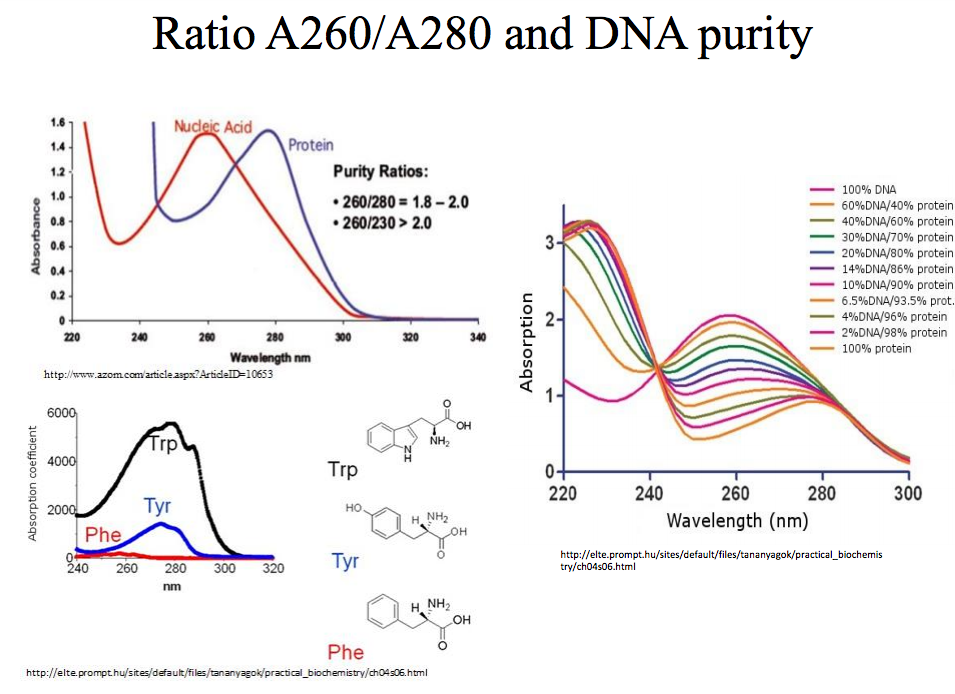
Solved What Does The Ratio Between Abs260 And Abs280 Chegg Com
Your equipment is doing what it was designed to do and thats read absorbance at specific wavelengths.
Rna absorbance 260 280. But DNA is not the only item that absorbs at 260 nm. The other common method of measuring the concentration of nucleic acids and protein is the UV-absorbance method which uses a spectrophotometer to measure the natural absorbance of light at 260 nm for DNA and RNA or 280 nm for proteins. The concentration of RNA isolated with RNeasy Kits can be determined by measuring the absorbance at 260 nm A260 in a spectrophotometer.
Therefore the ratio of A260A230 is frequently also calculated. A ratio of 20 is generally accepted as pure for RNA. These absorbance measures give you an idea of the concentration of your DNA prep and whether there are any other contaminants.
The absorbance of nucleic acid at 260 nm is measured within a plateau region of the spectrum while the 280 nm absorbance is generally measured on a steep sloped portion of the spectral curve. BMG LABTECH microplate readers are equipped with a xenon flashlamp for absorbance measurements and hence provide maximum flexibility to measure any wavelength between 220 and 1000 nm or all the whole spectrum of wavelengths. Exceptional wavelenth accuracy typically.
An absorbance of 1 unit at 260 nm corresponds to 40. For pure RNA and DNA A260280 ratios should be somewhere around 21 and 18 respectively. A ratio of 18 is generally accepted as pure for DNA.
260280 Ratio The ratio of absorbance at 260 nm and 280 nm is used to assess the purity of DNA and RNA. For pure DNA A 260280 is widely considered 18 but has been argued to translate - due to numeric errors in the original Warburg paper - into a mix of 60 protein and 40 DNA. I used Qiagen mini kit for isolation of RNA from newborn mouse kidneys.
UV spectroscopy is the most widely used method to quantitate RNA. This makes the detection and quantification of nucleic acids 260 nm and proteins 280 nm possible. Proteins on the other hand absorb best at 280 nm and organic compounds and chaotropic salts maximally absorb at.
The A 260 A 280 ratio is used to assess RNA purity. Both DNA RNA absorb light of 260nm wavelength you look to ratios. Then you measure the absorbance of the DNA sample.
Absorbance readings should be greater than 015 to ensure significance. An absorbance of 1 unit at 260 nm corresponds to 40. Dilute sample in RNase-free water then measure absorbance at 260 nm and 280 nm.
Similarly absorbance at 230 nm is accepted as being the result of other contamination. RNA quality can be determined by examining the ratio of absorption at 260 nm and 280 nm with UV spectrophotometry. Expected 260230 values are commonly in the range.
Historically the ratio of this absorbance maximum to the absorbance at 280 nm has been used as a measure of purity in both DNA and RNA extractions. Generally accepted as pure for RNA. RNA is ready for Next-Gen Sequencing RT-qPCR etc.
Furthermore compounds commonly used in the preparation of nucleic acids absorb at 260 nm leading to abnormally high quantitation levels. The samples were in RNA later. The concentration of RNA isolated with RNeasy Kits can be determined by measuring the absorbance at 260 nm A260 in a spectrophotometer.
Using this equation an A 260 reading of 10 is equivalent to 40 µgmL single-stranded RNA. Size Total RNA including smallmicroRNAs 17 nt. Absorbance Absorbance at 260 nm provides total nucleic acid content while absorbance at 280 nm determines sample purity.
Trace DNA can be removed by DNase I digestion page 6. For high-quality RNA A260A280 ratio should be in the range of 1921. 260280 The ratio of absorbance at 260 nm and 280 nm is used to assess the purity of DNA and RNA.
Purity A 260A 280 A 260A 230 18. The absorbance of a DNA sample measured at 260 nm on a spectrophotometer or microplate reader can be used to calculate its concentration. From what may be read as a perfect DNA sample based upon the A260280 alone your Nanodrop may be overstating the results.
The Qubit fluorometer uses fluorescent dyes to determine the concentration of either nucleic acids or proteins in a sample. RNA the aqueous phase following TRIzolchloroform or similar1 extraction in vitro transcriptions etc. A ratio of 20 is.
However these interference and preparation compounds also absorb at 280 nm leading to the calculation of DNA purity by performing ratio. A ratio of 18 is generally accepted as pure for DNA. The ratio of absorbance at 260 nm and 280 nm is used to assess the purity of DNA and RNA.
Binding Capacity Zymo-Spin IIICG Column green yield up to 100 µg RNA. Bradford gets skewed by arginine lysine and histidine. Dilute sample in water or buffer pH 75 then measure absorbance at 260 nm and 280 nm.
An A 260 A 280 ratio of 1821 indicates highly purified RNA. If the ratio is appreciably lower in either case it may indi-. RNA is ready for Next-Gen Sequencing RTqPCR etc.
The 260280 ratio is 15-22 and the 260230 ratio is very very low see attached image. A260280 ratio The A260280 ratio is generally used to determine protein contamination of a nucleic acid sample. This is a result common to most spectrophotometers.
Absorbance Absorbance at 260 nm provides total nucleic acid content while absorbance at 280 nm determines sample purity. Size Total RNA including smallmicroRNAs 17 nt. Because molecules have overlapping spectra eg.
Nucleic acids have absorbance maxima at 260 nm. Purity A 260 A 280 A 260 A 230 18. The measurement of one value on a plateau and another on a slope means that a slight shift in wavelength accuracy will have a large effect on 260280 ratios.
The ratio of the absorbance at 260 and 280 nm A 260280 is used to assess the purity of nucleic acids. Absorbance readings should be greater than 015 to ensure significance. And UV absorbance by tryptophan.
Nucleic acids DNA and RNA absorb maximally at 260 nm. Nucleotides RNA ssDNA and dsDNA all will absorb at 260 nm and contri b-ute to the total absorbance. Since free nucleotides RNA ssDNA and dsDNS absorb at 260 nm they all contribute to the total absorbance of the sample.
A ratio of 20 is generally accepted as. RNA can be quantified by measuring the absorption at 260 nm where 1 absorbance unit is equal to 40 μgml at a pH of about 75. The aromatic proteins have a strong UV absorbance at 280 nm.
A ratio of 18 is generally accepted as pure for DNA. The 260230 values for pure nucleic acid are often higher than the respective 260280 values. Since free nucleotides RNA ssDNA and dsDNS absorb at 260 nm they all contribute to the total absorbance of the sample.
Absorbance quantitation of DNA works on samples ranging from about 025 µgmL to about 125 µgmL in a microplate format. As I discussed proteins absorb most. Binding Capacity 10 µg total RNA Zymo-Spin IC Column.
2

Uv Vis Spectrophotometry Easy And Quick Quantification Of Nucleic Acids Eppendorf Handling Solutions

260 280 And 260 230 Ratios Nanodrop Nd 1000 And Nd
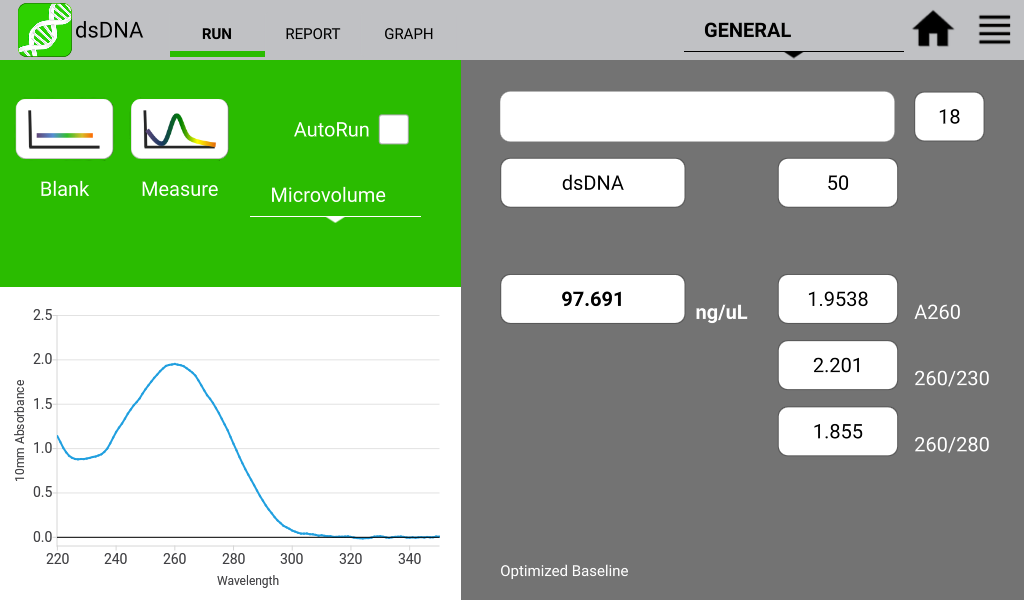
Purity Ratios Nucleic Acid Ratios Technical Note 130
2
3

Qiagen Allprep Dna Rna Extraction Kit For Ffpe Biocompare Com Kit Reagent Review
2


